%20(1)%20Final%20New%20color.png)
How to Remove Scratches from Boat Windows and Plastic Surfaces

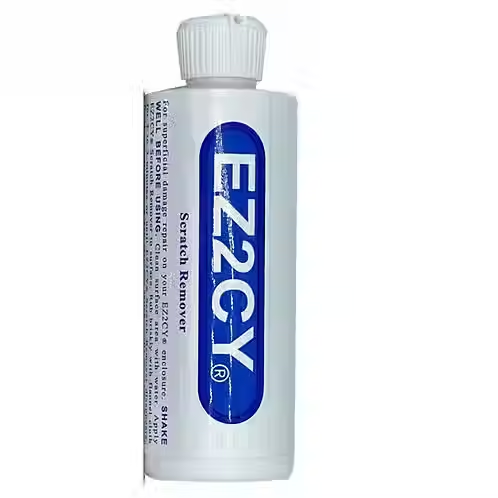
Scratched, hazy boat windows are not just an eyesore. They can reduce visibility in glare, make night docking riskier, and quietly drag down resale value. In fact, U.S. recreational boating remains massive, with around 11.6 million registered recreational boats (U.S. Coast Guard, 2023), and clear plastics like acrylic, polycarbonate, and isinglass are common across Florida and the broader U.S. coastline. The good news is that most “ruined” panels are recoverable with the right plastic scratch remover, technique, and expectations.
This 2026 guide shows you how to remove scratches boat windows, how to restore cloudy isinglass, and how to choose a scratch remover for acrylic enclosures without accidentally causing distortion, heat damage, or permanent haze. You will get a practical, step-by-step marine plastic polishing guide, product selection logic, common mistakes, and pro-level finishing tactics tailored to Florida’s sun, salt, and humidity.
1) Identify your material first (it changes everything)
Before you buff anything, identify whether you are working on acrylic (PMMA), polycarbonate (PC), PETG, or flexible vinyl (isinglass and similar clear vinyl). Each responds differently to abrasives, heat, and chemical cleaners, and misidentification is a top reason DIY restorations fail.
Why this matters in Florida, USA
Florida UV index levels frequently reach “very high” to “extreme” in summer, accelerating oxidation and micro-pitting on plastics. NOAA notes that UV Index values of 11+are classified as “Extreme” (NOAA, 2024). That UV load makes the right protectant and cleaning routine as important as the scratch removal itself.
2) Scratch severity checklist: decide whether to polish, sand, or replace
Not every scratch needs sanding, and not every panel is worth saving. A simple evaluation prevents wasted hours and avoids optical distortion that can happen when you remove too much material unevenly.
Repair economics in 2026
Replacement can be smarter when a panel is heavily crazed (fine cracking), delaminated hard-coat is peeling, or visibility is safety-critical. As a benchmark, the U.S. Bureau of Labor Statistics reported average consumer inflation pressures easing compared with the 2022 peak, but services and specialty marine labor remain relatively expensive (BLS CPI, 2025). DIY restoration is still one of the best cost-to-impact projects, especially for boaters maintaining older enclosures in Florida marinas. Using the best-rated boat enclosure plastic cleaner can also help extend panel clarity and delay premature replacement costs.
3) Choose the right plastic scratch remover (and avoid chemistry traps)
A “plastic scratch remover” is not one product. It is usually a system: cleaning, leveling (abrasive), refining (finer abrasive), and protection. The biggest trap is using the wrong solvent, glass cleaner, or aggressive compound designed for automotive clear coat rather than plastics.
What to look for in a marine-safe plastic polishing system
In 2026, marine detailing continues shifting toward lower-odor, water-based systems due to marina rules, environmental compliance, and consumer preference. This mirrors broader regulatory pressure to reduce VOC exposure in consumer and professional products (U.S. EPA indoor air and VOC guidance remains a key reference point, EPA, 2024). Practically, this means more water-based polishes and rinseless marine wash products that reduce runoff on docks.
4) Marine plastic polishing guide: step-by-step DIY process
This is the core process used by many restorers to remove scratches boat windows and improve clarity on acrylic and polycarbonate. The goal is controlled, uniform material removal and then refining until the surface is optically clear.
5) Comparison table: methods, results, time, and risk
Use this table to choose the least aggressive method that will meet your visibility goal. For many boat owners, “clear enough to see markers at dusk” matters more than showroom perfection.
Method | Best for | Typical DIY time per 2 ft² | Risk level |
Plastic polish by hand | Light swirls, minor haze | 20 to 45 minutes | Low |
DA polisher + plastic polish | Swirls and moderate haze | 10 to 25 minutes | Medium (heat, edge burn) |
Wet sand 2000 to 3000 + polish | Moderate scratches | 45 to 90 minutes | Medium to high (distortion) |
Wet sand 800 to 1500 + full polish system | Deep scratches, heavy wear | 90 to 180 minutes | High (optical distortion, thinning) |
Replace panel | Crazing, peeling hard-coat, severe yellowing | Varies (hours to days) | Low (but higher cost) |
6) Restore cloudy isinglass and flexible vinyl (without making it worse)
To restore cloudy isinglass, treat it like flexible vinyl, not rigid acrylic. The common failure mode is using aggressive abrasives or ammonia-based cleaners that accelerate clouding and brittleness. Another is folding and storing vinyl while damp, which encourages spotting and embedded grime. Following proper boat enclosure cleaning and maintenance practices can help extend panel clarity and reduce premature wear.
Edge case: “milky” haze that keeps returning
If haze improves but returns quickly, the vinyl may be aging due to plasticizer migration and UV exposure. In hot, humid Florida storage, this can accelerate. At that stage, you can often improve visibility, but full “new look” clarity may be unrealistic, and replacement might be the only lasting fix.
7) Common mistakes to avoid (and pro tips that actually help)
Most DIY failures are not from the product. They are from technique, heat, and skipping steps. If you want to know how to buff out scratches on boat plastic successfully, use these guardrails.
8) 2026 best practices: coatings, hard-coats, and what’s changed lately
Boat window restoration DIY has evolved. In 2026, more marine plastics ship with hard-coat layers (especially polycarbonate), and more owners are using protective coatings designed for plastics. These trends change how you should approach scratch removal.
Hard-coated polycarbonate: proceed cautiously
Hard-coat layers improve scratch resistance but complicate restoration. If you sand through the coating unevenly, the panel can look patchy or distort light differently across the surface. When you suspect hard-coat, start with the least aggressive polish and do a test spot, then decide whether full-surface refinishing is worth it.
Protective coatings are more common in 2026
Plastic-safe ceramic-style coatings and marine polymer sealants are increasingly used to reduce water spotting and make rinsing easier. They do not stop physical scratches, but they can reduce cleaning friction and slow oxidation. If you boat year-round in Florida, reapply a protectant on a predictable schedule, often every 4 to 8 weeks for traditional protectants and longer for coatings depending on product claims and real-world wash frequency. Using a dedicated marine enclosure cleaner also helps maintain surface clarity while reducing the risk of damage from harsh cleaning products.

Evidence that maintenance matters
Marine retailers and boating safety organizations continue to emphasize preventive maintenance because it reduces failures and improves safety outcomes. The U.S. Coast Guard reports over 3,800 recreational boating incidents annually in recent reporting, with property damage totaling hundreds of millions of dollars(USCG Recreational Boating Statistics, 2023). While window clarity is not the top causal factor, better visibility is a practical safety enhancer during docking, storm navigation, and night operation.
Conclusion: clear windows are a safety and value upgrade
Removing scratches from boat windows is one of the highest ROI DIY upgrades for visibility, pride of ownership, and resale. In Florida, USA, sun and salt make prevention and protection just as important as the initial restoration.
If you want help choosing a scratch remover for acrylic enclosures or building a simple maintenance schedule for your boat windows, Ez2cy can help you map the right products and process for your exact setup and boating conditions in Florida.
Frequently asked questions
What is the best plastic scratch remover for boat windows in 2026?
The best option is usually a multi-step plastic polishing system matched to your material, acrylic versus polycarbonate versus vinyl. For light swirls, a dedicated plastic polish is often enough; for deeper defects, combine wet sanding and polishing. Always do a small test spot first to confirm clarity and avoid distortion.
How do I remove scratches from boat windows without a machine polisher?
Use a hand applicator pad with a plastic polish and work in straight lines, then cross-hatch. It takes longer, but it reduces heat risk and gives beginners more control. For moderate scratches, hand polishing may not be enough, and very fine wet sanding may be required.
Can I use automotive rubbing compound on acrylic or polycarbonate?
Sometimes, but it is risky because many rubbing compounds are formulated for painted clear coats, not plastics. They can leave haze or micro-marring, and they can cut too aggressively on softer plastics. A plastic-specific compound is safer and more predictable for boat window restoration DIY.
How do I restore cloudy isinglass if it looks yellow or milky?
Start with a vinyl-safe cleaner, then use a dedicated vinyl polish and protectant. If the cloudiness is from UV aging or plasticizer changes, you can often improve it but may not fully reverse it. Avoid ammonia cleaners and aggressive abrasives that can accelerate brittleness.
Should I wet sand boat plastic windows, and what grit should I start with?
Wet sanding is appropriate when the scratch catches a fingernail or polishing alone does not improve clarity. Start with the finest grit that can still level the damage, often 2000 to 3000 grit for moderate defects. Going too coarse too early increases the risk of distortion and creates more work in polishing.
How do I buff out scratches on boat plastic without warping it?
Keep the surface cool, work in shade, and use light to moderate pressure. A dual-action polisher is safer than a rotary for most DIYers because it reduces localized heat buildup. Stop frequently to check temperature by touch and inspect progress.
What if my polycarbonate window has a hard-coat layer?
If it is hard-coated, aggressive sanding can remove the coating unevenly and cause patchy optical effects. Start with non-abrasive cleaning, then the least aggressive plastic polish in a test area. If results are uneven, consider professional restoration or replacement.
How long does a restored boat window stay clear in Florida?
It depends on UV exposure, storage, washing habits, and whether you apply a protectant. In high sun and salt conditions, clarity can degrade noticeably within months if you do not protect and rinse properly. Regular rinsing and monthly protectant application can significantly extend results.
Can I use household glass cleaner on boat plastic windows?
It is not recommended because many household glass cleaners contain ammonia or other ingredients that can haze plastics over time. Use products labeled plastic-safe and marine-appropriate. When in doubt, test on a small corner first.
When should I replace instead of restore a scratched or cloudy panel?
Replace when there is widespread crazing, severe yellowing that does not respond to vinyl-safe restoration, or peeling hard-coat on polycarbonate. Also replace if you need safety-critical visibility and restoration would leave distortion. Restoration is best when the damage is mainly surface-level scratches and oxidation.


Comments