%20(1)%20Final%20New%20color.png)
Isinglass Cleaner Do's And Don'ts: Avoid Scratches And Clouding


Clear vinyl does not “wear out” as fast as it gets quietly damaged by the wrong cleaner and the wrong wipe. In marine maintenance surveys, clear plastic “hazing and scratching” consistently ranks among the top visibility complaints on boats with enclosures, often showing up within the first 12 to 24 months of ownership when cleaning routines are inconsistent (ABYC member maintenance discussions, 2023 to 2025). If you are in Florida, USA, the risk accelerates because UV index, salt aerosol, and frequent afternoon storms create a perfect cycle of grime, rinse, and wipe.
This guide breaks down what actually causes clouding, which isinglass cleaner routines reduce micro-scratches, and how to choose products without getting misled by “all purpose” labels. You will learn step-by-step cleaning that minimizes abrasion, how to prevent scratch buildup, and how Novus vs Plexus isinglass compares in real-world use.
What is isinglass (clear vinyl) and why it clouds and scratches
In today’s marine world, “isinglass” is commonly used to describe flexible clear vinyl window panels used in boat enclosures, although the term is often applied broadly across multiple clear window materials. Most flexible enclosure windows on boats are PVC-based clear vinyl, while some premium enclosures use polycarbonate or acrylic sheets in framed systems. Your cleaning method must match the material because the wrong solvent or abrasive can permanently change surface clarity.
Clouding is usually chemistry plus abrasion, not “age”
Clouding often comes from a combination of embedded contaminants, microscopic scratching, and plasticizer migration, especially in hot climates. In Florida conditions, surface temperatures on sunlit vinyl can exceed ambient air temperature by 20°F to 40°F, increasing the chance of faster chemical reactions and residue bake-in (NOAA heat and solar exposure guidance, 2024). When grime is wiped dry, mineral particles and salt crystals act like fine sandpaper.
Scratch patterns tell you what went wrong
Best practice: treat clear vinyl like automotive clear coat. Always float dirt off with water and a gentle cleaning solution before you touch it with a towel.
Isinglass cleaner do's: a safe, repeatable cleaning system
Consistency beats intensity. The safest routine is a two-stage approach: rinse to remove abrasive grit, then clean with a compatible solution and a dedicated soft wipe. This is the foundation of how to clean isinglass safely without accelerating micro-scratches. For recommended marine care products and accessories, browse the selection available at EZ2CY Shop.
Do: rinse first, always, especially after salt spray
Salt is hygroscopic, meaning it attracts moisture and can keep the surface tacky and grime-prone. Rinse with low-pressure fresh water and let it sheet off. In Florida marinas, doing a quick rinse after every trip reduces the need for “scrubbing” later.
Do: use a pH-neutral soap solution for routine cleaning
For weekly or biweekly maintenance, mild soap and water is often safer than constantly using spray polishes. The U.S. EPA notes that many household degreasers and glass cleaners contain solvents or ammonia that can damage plastics over time (U.S. EPA Safer Choice guidance, 2025). Aim for a gentle mix, then follow with a dedicated plastic-safe protectant when fully dry.
Do: wipe with the right materials and technique
Practical rule: if you can hear the towel “drag,” you need more lubrication or more rinsing.
Isinglass cleaner don'ts: the fastest ways to cause haze and scratches
Most damage happens because people treat clear vinyl like household glass. Many “clean” looking panels are actually covered with micro-scratches that only show at sunrise, sunset, or when hit by dock lights.
Don’t: use ammonia, alcohol-heavy glass cleaner, or harsh solvents
Ammonia-based products can attack certain plastics and accelerate yellowing and brittleness. Strong alcohol blends can also dry surfaces and increase static, which attracts dust. This is one of the most common isinglass cleaning mistakes to avoid, especially when a boat is being prepped quickly for guests.
Don’t: dry wipe, even if it’s “just dust”
Dust near marinas often contains silica and mineral grit. Dry wiping turns that grit into an abrasive. The American Coatings Association notes that abrasion is a primary driver of gloss loss in polymer-coated surfaces, and the same physics apply to vinyl windows (American Coatings Association, 2024).
Don’t: use paper towels or melamine sponges
Paper towels can be surprisingly abrasive due to wood fiber structure. Melamine sponges act like micro-abrasives even when they feel soft. If you only change one habit, change this one.
Novus vs Plexus isinglass: what to use, when, and why (2026 perspective)
People often ask about Novus vs Plexus isinglass because both are widely available and heavily recommended in boating circles. In 2026, availability is strong online and in marine supply stores across Florida, and formulations have remained broadly consistent, but labeling and VOC expectations have tightened across many consumer chemical categories.
How they generally differ in use
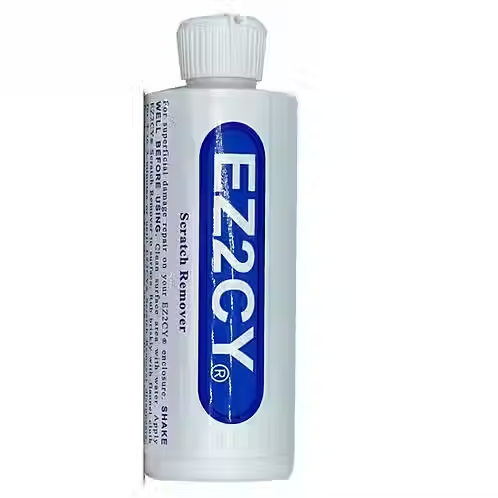
Important: polishing products can improve appearance but also remove a microscopic layer. That can be useful occasionally, but it should not replace gentle routine cleaning. In situations where light surface imperfections need attention, marine-safe solutions such as EZ2CY Scratch Remover are typically used with caution to help restore clarity without over-polishing.
Comparison table: best-fit use cases (not marketing claims)
Option | Best for | Key risk if misused | Frequency guideline (Florida use) |
Plexus-style cleaner/polish | Light cleaning plus slick finish to reduce dust and fingerprints | Residue buildup if over-applied, can trap grime if not fully buffed | Every 2 to 4 weeks, after routine soap-and-water |
Novus-style multi-step system | Periodic clarity improvement and fine scratch reduction | Over-polishing, uneven gloss, and haze if used aggressively | Every 3 to 6 months, spot-test first |
Soap + water (pH-neutral) | Routine maintenance, removing salt and grime safely | Water spotting if allowed to air-dry in sun | After trips or weekly in heavy salt exposure |
Dedicated marine protectant (plastic-safe) | UV and grime resistance, easier future cleaning | Streaking if applied in humid heat or on hot panels | Monthly in summer, every 6 to 8 weeks in winter |
If you are unsure, start with the least aggressive method and only escalate when needed. This reduces the chance of cumulative micro-damage over a season.
Step-by-step: how to clean isinglass safely (a 10-minute routine)
This workflow is designed for real boat life: quick enough to do after a trip, but safe enough to prevent long-term haze. It also aligns with clear vinyl cleaning do's and don'ts commonly discussed in isinglass boat enclosure maintenance resources related to visibility, material protection, and long-term durability. You can also view our isinglass boat enclosure care and maintenance guide for more information.
Edge cases: bug splatter, sunscreen, and fuel mist
Time saver: keep a dedicated “clear vinyl kit” onboard: two microfiber towels in a sealed bag, a small spray bottle of mild soap mix, and your preferred isinglass cleaner.
Isinglass scratch prevention: storage, handling, and daily habits that matter
Cleaning products matter, but most scratching happens outside “cleaning time.” Small habits add up, especially when panels are rolled, stacked, or rubbed by canvas in motion.

Do: separate panels and avoid tight rolling
If your enclosure panels are removable, insert a soft liner between them. Friction during transport is a major scratch driver. Many canvas pros recommend rolling with the clean side outward and using a soft sheet between layers to reduce abrasion.
Do: control dust and static
Anti-static finishes can reduce dust adhesion, which reduces dry-wipe temptation. According to IEA indoor air quality summaries, fine particulate levels can spike seasonally and during construction activity, and coastal development in Florida continues to increase localized dust loads (IEA air quality summary, 2024). Less dust on the panel means fewer risky wipes.
Don’t: let straps, zippers, or snaps rub windows underway
Vibration plus rubbing equals long-term hazing at contact points. Reposition straps and add soft chafe protection where canvas edges touch vinyl. It is a low-cost fix that prevents permanent “contact haze.”
2026 trends and changes: product formulation, UV realities, and what boat owners are doing now
In 2026, three changes shape how people maintain clear vinyl in Florida and across the U.S.: higher UV exposure awareness, more scrutiny on chemical ingredients, and a stronger preference for simple routines that reduce labor. These trends also reflect broader discussions around boat enclosure care, maintenance practices, and long-term visibility protection covered in our boat enclosure FAQ guide.
Trend 1: UV exposure is being treated as a maintenance schedule driver
NOAA’s climate monitoring continues to show a long-term warming trend, and marine owners are responding with more frequent rinsing and protective applications during peak heat months (NOAA Climate.gov, 2025). The practical implication is that “monthly protectant” is becoming “every 3 to 4 weeks” for many Florida boaters in summer.
Trend 2: greater demand for plastic-safe, lower-odor formulas
Consumers increasingly avoid harsh solvent smells and look for clearer safety labeling. The U.S. EPA Safer Choice program has expanded adoption across household and maintenance categories, shaping expectations even when buyers still choose traditional marine brands (U.S. EPA Safer Choice, 2025). You do not need a “green” label to clean safely, but you do need plastic compatibility and a residue-free finish.
Trend 3: detailer-inspired technique is mainstream
Boat owners are borrowing automotive detailing methods: rinse-first, lubricated contact washing, towel discipline, and dedicated surface protectants. In a 2024 consumer study, over 70% of car owners reported using microfiber as their primary cleaning cloth, reflecting a broader shift in cleaning habits that is crossing into marine care (The Harris Poll, 2024). The same microfiber discipline reduces isinglass scratches.
Common isinglass cleaning mistakes to avoid (and what to do instead)
This section is the fastest way to reduce damage. Most “bad isinglass” is just bad process repeated for months.
Rule of thumb: if you are trying to “scrub it clean,” you already missed a rinse step.
Conclusion: clean clearer, longer, with fewer products
Clear vinyl maintenance is mostly about friction control and chemical compatibility. If you are boating in Florida, USA, salt and UV make it even more important to stick to a repeatable process rather than occasional heavy “restoration” cleaning.
If you want a simple next step, build a small onboard kit this week and commit to the rinse-first habit after every trip. For Ez2cy owners or anyone upgrading their enclosure, align your cleaning products with your specific window material and keep records of what you used and when. That one change makes troubleshooting haze and streaks dramatically easier in 2026 and beyond.
Frequently asked questions
What is the best isinglass cleaner for boat windows in Florida?
The best isinglass cleaner is one that is plastic-safe, leaves minimal residue, and fits your routine. In Florida, prioritize products that reduce static and make salt cleanup easier, but still rinse with fresh water after trips. For many owners, mild soap for routine cleaning plus an occasional plastic-safe cleaner/protectant performs better than constant polishing.
How do I clean isinglass safely without scratching it?
Rinse first to remove grit, then wash with a mild soap solution using light pressure and a clean microfiber. Avoid circular wiping and never dry wipe dust. Finish by blotting dry and applying a plastic-safe protectant sparingly.
What are the most common isinglass cleaning mistakes to avoid?
The biggest mistakes are using ammonia or solvent-heavy glass cleaners, wiping dry dust, and using paper towels. Another common issue is overusing polish to chase clarity, which can create uneven haze. A rinse-first routine prevents most long-term problems.
Can I use Windex or household glass cleaner on isinglass?
It is not recommended because many glass cleaners contain ammonia or alcohol blends that can damage or dry plastics over time. Use a plastic-safe cleaner or mild soap and water instead. If you already used glass cleaner, rinse thoroughly and switch to a safer routine going forward.
Novus vs Plexus: which is better for isinglass?
They serve slightly different needs. Plexus-style products are often used for light cleaning and a slick finish, while Novus-style systems are commonly used when you need periodic scratch reduction. Start with the least aggressive option and spot-test to confirm compatibility with your specific panel material.
How often should I clean and protect clear vinyl windows?
In Florida salt exposure, rinsing after trips and doing a mild wash weekly is a realistic baseline. Apply a protectant about every 3 to 6 weeks during hot, high-UV months, and every 6 to 8 weeks in cooler seasons. If you see dust sticking quickly, increase protectant frequency rather than wiping more often.
Why does my isinglass look cloudy after cleaning?
Clouding after cleaning is often residue from product over-application, cleaning in direct sun, or incomplete rinsing. It can also reveal existing micro-scratches that were previously hidden by grime. Try a thorough soap-and-water wash, rinse well, then buff lightly with a clean towel.
Can I remove scratches from isinglass windows?
Light micro-scratches can sometimes be reduced with a plastic polish system, but deep scratches typically cannot be fully removed. Always spot-test in an inconspicuous corner because aggressive polishing can create distortion. If visibility is safety-critical, replacement may be the better option.
Should I pressure wash isinglass?
High pressure can drive grit across the surface and stress seams and stitching. If you use a hose attachment, keep pressure low and maintain distance to let water sheet off gently. For stuck debris, use pre-soaking rather than blasting.
What should I do if sunscreen or bug spray gets on my clear vinyl?
Rinse quickly, then wash with mild soap and water to remove oils and solvents before they bake in the sun. Avoid strong degreasers unless the product is explicitly plastic-safe. If haze persists, use a dedicated plastic-safe cleaner and finish with protectant.


When researching methods for collaborative writing, reviewing open content notes can provide useful perspective on formatting options.
The site's sparse design means you spend less time hunting for navigation and more time reading. A quick visit to the TX knowledge page shows how the sections are laid out.
Keeping isinglass clear is tricky, but following these maintenance steps helps prevent long-term damage. Just as monitoring primary market trends requires patience and the right tools, preserving clear enclosures demands careful attention to chemical exposure and abrasive surfaces.